
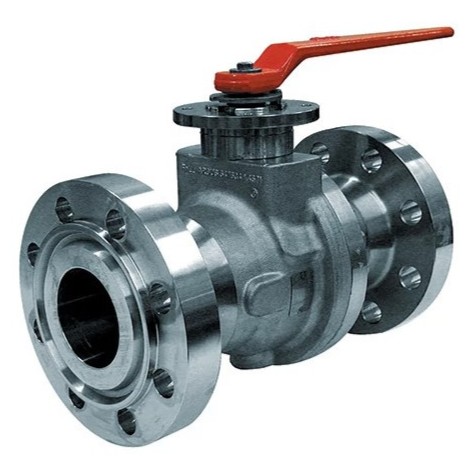
Trunnion Mounted Ball Valve
Overview
The project was initiated in response to customer feedback that the weight of one of our trunnion- mounted ball valve product lines was placing excessive loads on customer pipelines. The objective was to reduce the valve weight by 20% while maintaining compliance with the applicable design standards and requirements.
I joined the project when the engineering work began, supporting the Design to Value team with the mechanical design activities. Working as part of a three-person engineering team, I was responsible for redesigning the DN 80 and DN 100 valve bodies across different pressure ratings. The team ultimately achieved an average weight reduction of approximately 28% by transitioning from forged to cast valve bodies, while retaining the existing internal components.
Project Development
The redesign focused exclusively on the valve bodies. All internal components, including the valve trim, remained unchanged. The engineering work was divided among three Design to Value team members, with each responsible for a selection of valve sizes. The challenge was to adapt the existing forged body designs for casting while maintaining the applicable requirements for the DIN valve range.
Valve Body Redesign
The redesign required developing a new external geometry for the valve bodies while preserving the existing internal geometry and functional interfaces. This provided considerable design freedom to rethink the external shape and adapt it to the requirements of casting, rather than simply modifying the original forged design.
The manufacturing approach varied depending on valve size: investment casting was used for smaller bodies, while larger bodies were designed for sand casting.
I developed the DN 80 and DN 100 variants across different pressure ratings, creating the 3D CAD models and corresponding casting and manufacturing drawings. Throughout development, I iteratively evaluated the designs using the team's engineering calculation spreadsheet, with particular attention to wall thicknesses and compliance with applicable design standards.
My designs also served as a reference for the development of nearby valve sizes.
Engineering Documentation and Design Review
The project required extensive engineering documentation, including CAD models and casting and manufacturing drawings for the different size and pressure-rating combinations. We uploaded our deliverables to SAP, where they were submitted for review and approval by the subject matter expert at the manufacturing site in Germany.
Following completion of the engineering work, the project team travelled to Ettlingen, Germany, to present the results and facilitate a design review with the stakeholders involved in the project.
Outcome
The project achieved an average valve weight reduction of approximately 28%, exceeding the original 20% target. Its scope also expanded considerably beyond the initial project charter, growing from 24 DIN valves to a delivery covering 33 DIN and 24 ASME valves.
The broader project delivery included 392 engineering drawings, 172 released calculations and 1,164 SAP part codes, alongside additional engineering activities.
The team received a Celebrate Award in recognition of its contribution. The award highlighted the team's ability to deliver substantially more than originally expected, on time and with high-quality engineering work.